
Everything Is Connected: Why Small Daily Inputs Shape Your Entire Physiology
This article is part of Elixium’s Everything Is Connected series exploring how daily inputs influence metabolic health and weight regulation.
Part 1: Nutrition & Blood Sugar — The Foundation of Weight Regulation
Your body is constantly collecting inputs and adapting. Sleep, stress, movement, and nutrition all feed into the same regulatory systems: blood sugar control, hormonal signaling, inflammatory response, and overall metabolic function. In clinical practice today, one of the biggest misrepresentations of the body is that its systems function independently, when in reality, they don’t.
This is something we emphasize often, because it fundamentally changes how you understand your health. This is especially important when understanding blood sugar regulation, metabolic health, inflammation, hormone balance, and sustainable weight management.
The body operates as an integrated network, constantly sending signals and driving responses across systems to adjust as needed. This continuous communication is how the body maintains balance, known as homeostasis. Over time, these responses compound and begin to form patterns. And those patterns tell a deeper story — one that can be measured.
Patients often describe these patterns in terms of symptoms they experience, like low energy, brain fog, mood swings, and, most commonly, weight gain or difficulty losing weight. From a clinical perspective, these symptoms should not be seen as random or isolated. Why? Because they’re signals reflecting the interaction of multiple systems beneath the surface.
This is why data is essential, but what gives data meaning is understanding when and how to interpret it within the context of the individual.
At Elixium, we shift this misrepresented approach to one of whole-body, systems-based care. We DON’T isolate systems or chase individual symptoms. We interpret patterns through individualized data and the daily inputs driving them. This allows us to tailor care accordingly—factoring in both physiology and patient-specific goals, like sustainable weight loss and improved body composition.
Uncover what’s beneath the surface and find care that evolvesExplore Elixium’s whole-body metabolic and diagnostic approach
How Blood Sugar Affects Metabolism and Weight Regulation
Blood sugar regulation directly influences how the body produces, stores, and utilizes energy. Frequent blood sugar spikes and crashes can affect insulin response, inflammation, appetite regulation, hormone signaling, and fat storage over time. When blood sugar is more stable, the body is better able to support consistent energy, metabolic function, and sustainable weight regulation.
Key Takeaways
Blood sugar regulation influences metabolism, hormones, inflammation, and weight regulation
Small daily inputs, especially nutrition, compound over time and shape long-term metabolic health
Repeated blood sugar spikes contribute to cravings, energy instability, inflammation, and weight gain
Balanced meals that combine carbohydrates, protein, and healthy fats help support blood sugar stability and metabolic function
Lab data can help identify patterns related to insulin response, metabolic health, and body composition changes
Consistency and Balance
Consistent patterns support regulated physiology, while imbalanced ones create variability and strain the system. And where does that variability often show up first? Weight gain or difficulty losing weight.
Nutrition is one of the most impactful inputs to address, not because it’s the only factor, but because it’s one of the most frequent and controllable variables influencing your body every single day.
When you start to view nutrition through this lens, the focus shifts from short-term dieting to long-term, consistent habits. It moves from something you do temporarily to a foundational driver of metabolic health.
Blood Sugar Regulation Impacts the Entire Body
Let’s break it down the way your body does, through blood sugar balance:
Every meal or snack you eat initiates a metabolic response. Carbohydrates are broken down into glucose (the body’s primary fuel source), which then enters the bloodstream. In response, insulin (our storage hormone) is released to help move that glucose into cells to be used for energy immediately or stored for later.
From there, hormones adjust, cellular energy shifts, and inflammatory pathways are either supported or stressed. This is all happening whether you’re aware of it or not.
From a biochemical standpoint, how you structure what you eat matters.
Blood Sugar Spikes Influence Energy, Cravings & Weight
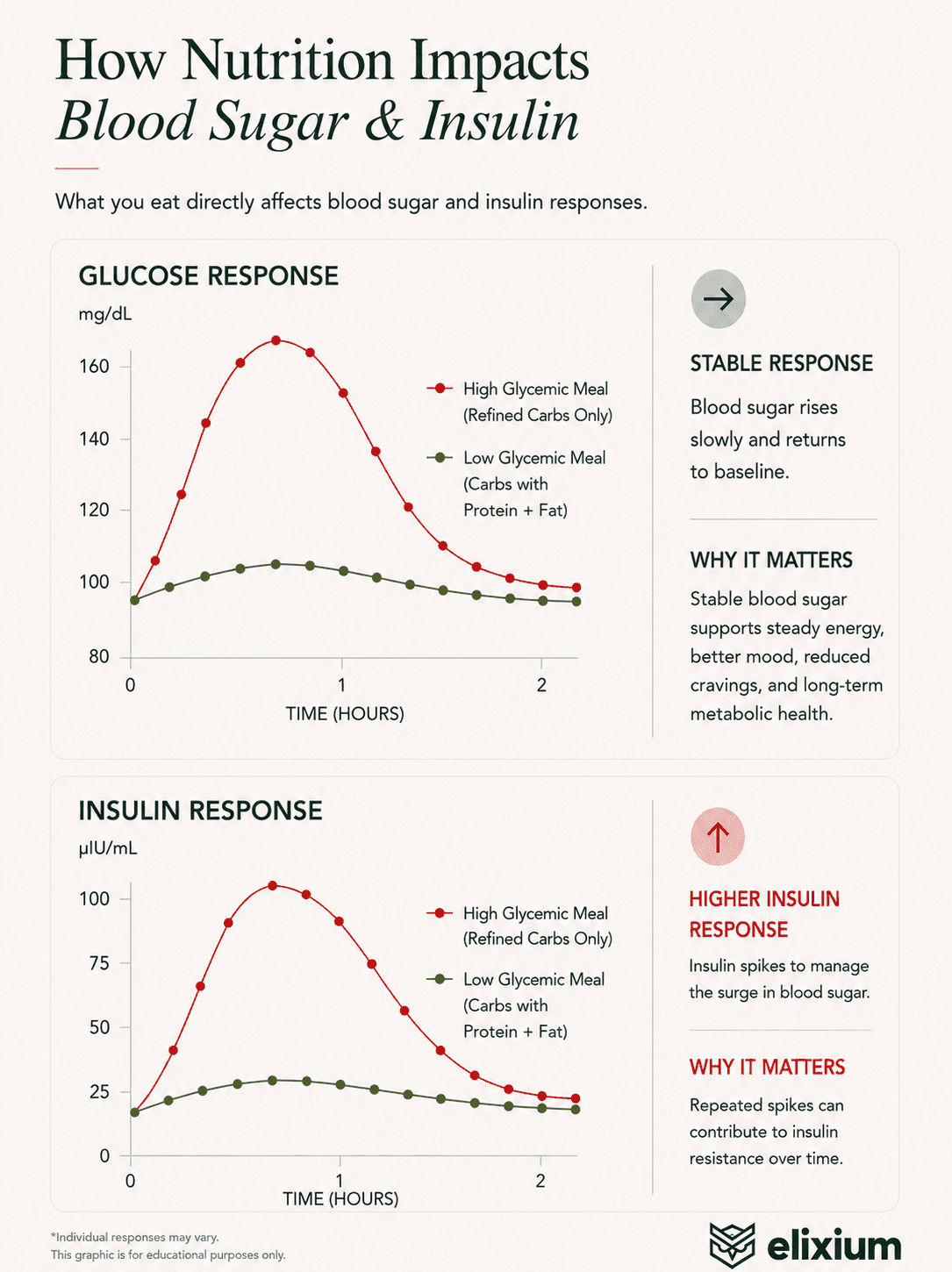
When meals or snacks are imbalanced, typically higher in carbohydrates without adequate protein or fat, glucose rises more quickly. This leads to a stronger insulin response, followed by a sharper drop in blood sugar. That drop doesn’t just affect your current energy level—it creates downstream effects across multiple systems, increasing cortisol (your stress hormone) and disrupting leptin and ghrelin (your hunger and satiety hormones).
The result is less stable blood sugar regulation throughout the day, along with increased cravings for carbohydrates and caffeine.
Visuals with real blood sugar readings help bring this to life, showing what happens when you eat carbohydrates like fruit alone versus when you pair them with protein or fat. Notice the spike in the graph and how quickly the glucose readings fall in under 2 hours, and how stable the combination of foods is.
Inconsistency and Imbalance
Now layer that pattern across multiple meals, across multiple days, and what starts as a simple input and biological response becomes a systemic pattern.
At the same time, swinging too far in the opposite direction—completely eliminating carbohydrates—creates a different kind of imbalance. Carbohydrates are the body’s preferred energy source, and when they’re consistently under-consumed, the body has to compensate. One of the ways it does this is by breaking down muscle tissue to meet energy demands.
Muscle is metabolically active and plays a key role in blood sugar regulation. Losing muscle can slow metabolic function, impair glucose control, and make sustainable weight regulation more difficult over time.
So while excess and imbalance create one set of problems, complete restriction creates another. The goal is not elimination—it’s balance.
Over time, repeated fluctuations in blood sugar extend beyond metabolism. We begin to see reduced insulin sensitivity, where the body becomes less responsive to insulin and requires more of it to manage blood sugar, along with increased inflammation and a greater tendency to store fat, particularly visceral fat.
Visceral fat is stored around internal organs and is more closely associated with metabolic and cardiovascular risk, as well as changes in body composition.
This is why consistent macronutrient balance to support blood sugar regulation is foundational to overall health and weight regulation.
Nutrition Plays a Central Role in Metabolic Health
Combining carbohydrates with protein and healthy fats helps regulate the rate of glucose absorption, moderate insulin response, and create a more stable internal environment.
But balance isn’t just about macronutrients in isolation—the quality and composition of food matter too. This is why our providers emphasize fiber and micronutrient-dense foods, which supply essential vitamins and minerals while supporting overall system function.
At the same time, this balanced approach allows for flexibility and individualization. The goal is not perfection or one prescribed way of eating—it’s about creating a consistent structure that supports your system, even when life inevitably becomes unstructured.
From Inputs to Data
From a lab perspective, these patterns are not theoretical. They are measurable.
Repeated imbalances in daily dietary inputs can show up as:
elevated fasting glucose
increased insulin levels
higher A1C
markers of inflammation
unfavorable changes in lipid profiles
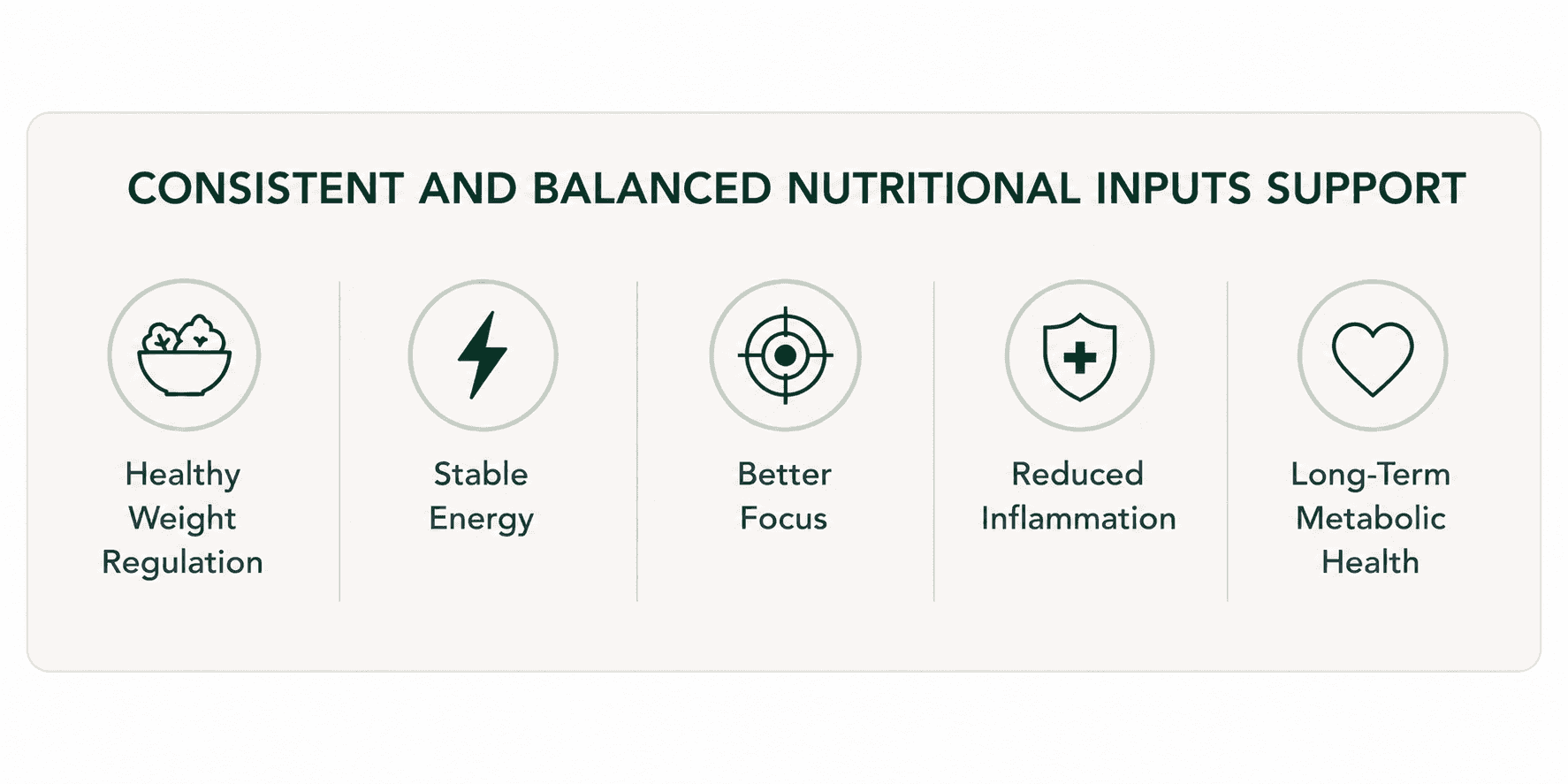
These markers don’t shift because of a single meal; they reflect what your body is exposed to consistently. Over time, that is often reflected in both the weight you carry and your overall body composition.
The input principle applies across all systems. Stress influences blood sugar, blood sugar influences hormones, hormones influence inflammation, and inflammation influences cardiovascular and metabolic health. Each system influences the next.
This is why we don’t take a surface-level approach at Elixium and why we’ll continue to explore other core variables in the following parts of this series.
Trying to isolate a single driver of weight is often ineffective, because more often than not, it’s not one single factor.Learn more about Elixium’s metabolic, hormone, and diagnostic testing approach
Applying the Input Principle
Your body reflects what you do repeatedly. Something as simple as consistently balanced versus imbalanced meals and snacks can stabilize or disrupt blood sugar, support or strain hormones, reduce or contribute to inflammation, and ultimately influence long-term metabolic health and weight regulation—not in isolation, but as part of an interconnected system.
It’s not only about “eating healthy,” which can mean different things to different people. It’s about understanding how your inputs translate internally, creating consistency where it matters, and using your data to bring clarity to complex processes so you can make informed decisions that support sustainable weight loss, improved body composition, and long-term metabolic health.
Frequently Asked Questions — About Blood Sugar & Metabolic Health
What is metabolic health?
Metabolic health refers to how efficiently the body produces, stores, and utilizes energy while maintaining stable regulation across interconnected systems. When metabolic health is supported, the body is generally better able to maintain stable energy, healthy blood sugar regulation, body composition, and overall physiologic balance over time.
What causes blood sugar spikes throughout the day?
Blood sugar spikes commonly occur when meals are higher in carbohydrates without enough protein, healthy fats, or fiber to slow glucose absorption. Stress, poor sleep, and inconsistent eating patterns may also influence blood sugar regulation.
How does blood sugar affect weight gain and cravings?
Rapid fluctuations in blood sugar can increase hunger, cravings, and energy instability throughout the day. Over time, repeated spikes may also negatively influence insulin sensitivity, inflammation, and fat storage patterns.
Can balanced meals improve metabolic health?
Balanced meals that combine carbohydrates, protein, healthy fats, and fiber help support more stable blood sugar regulation, sustained energy, and overall metabolic function.
What is the connection between insulin resistance and weight regulation?
When the body becomes less responsive to insulin, it often requires higher amounts to regulate blood sugar. Over time, this may contribute to increased fat storage, energy instability, and difficulty regulating weight.
How do lab tests help identify metabolic imbalances?
Lab testing can help identify patterns related to glucose regulation, insulin response, inflammation, and lipid metabolism, providing a clearer picture of how the body is functioning internally. At Elixium, this functional and systems-based approach allows for earlier intervention, more personalized care, and opportunities to support long-term metabolic health optimization before dysfunction becomes more advanced.
If you’re looking for more clarity and direction in reaching your health goals, find your personalized Elixium starting point:Start your personalized metabolic and wellness assessment with Elixium’s Clarity Check
The Next Input: Movement
In the next part of this series, we’ll shift to exercise, another major input that, alongside nutrition, is often the primary (and sometimes only) focus for individuals trying to lose weight. We’ll break down how movement influences these same systems and why more isn’t always better when it comes to driving sustainable metabolic change.

Victoria Hasenyager, RDN
Registered Dietitian
Head of Strategic Partnerships & Elixium Labs Operations
Published : 06/15/2026