Everything Is Connected: Why Small Daily Inputs Shape Your Entire Physiology
This article is part of Elixium’s Everything Is Connected series exploring how daily inputs influence metabolic health and weight regulation.
Part 2: Exercise & Adaptation — The Driver of Weight and Metabolic Change
Regular movement influences metabolic health, insulin sensitivity, body composition, recovery, and long-term weight regulation in ways that extend far beyond calorie expenditure.
To understand why, we first need to understand how the body responds to repeated inputs over time.
Your body is constantly collecting inputs and adapting. Sleep, stress, movement, and nutrition all feed into the same regulatory systems: blood sugar control, hormonal signaling, inflammatory response, and overall metabolic function. In clinical practice today, one of the biggest misrepresentations of the body is that its systems function independently, when in reality, they don't.
This is something we emphasize often because it fundamentally changes how you understand your health. This is especially important when understanding blood sugar regulation, metabolic health, inflammation, hormone balance, and sustainable weight management.
The body operates as an integrated network, constantly sending signals and driving responses across systems to adjust as needed. This continuous communication is how the body maintains balance, known as homeostasis. Over time, these responses compound and begin to form patterns. And those patterns tell a deeper story – one that can be measured.
Patients often describe these patterns in terms of symptoms they experience, like fatigue, poor recovery and performance, difficulty building or maintaining muscle mass, stalled weight loss, or changes in body composition despite maintaining the same nutrition habits. From a clinical perspective, these symptoms should not be seen as random or isolated. Why? Because they're signals reflecting the interaction of multiple systems beneath the surface.
This is why data is essential, but what gives data meaning is understanding when and how to interpret it within the context of the individual.
At Elixium Health, we shift this misrepresented approach to one of whole-body, systems-based care. We DON'T isolate systems or chase individual symptoms. We interpret patterns through individualized data and the daily inputs driving them. This allows us to tailor care accordingly, factoring in both physiology and patient-specific goals, like sustainable weight loss and improved body composition.
Uncover what’s beneath the surface and find care that evolves over time:
Explore Elixium Health’s whole-body metabolic and diagnostic approach
Exercise Is More Than Calorie Burning
Exercise for weight loss or weight maintenance is often reduced to a conversation around calorie expenditure. But physiologically, movement does far more than simply increase daily energy output.
Exercise should not be viewed simply as a mechanism to "burn calories," but as an input capable of shaping positive adaptation across the entire body, influencing weight, body composition, and overall metabolic health.
The burn-to-earn mindset often leads to overexercise and under-recovery, where movement becomes a form of compensation rather than a tool to support metabolic adaptation and long-term health.
Movement is a Signal to the Body
Movement sends signals to the body that influence how it utilizes and regulates energy, maintains or builds muscle tissue, responds to stress, and adapts metabolically over time. The type, intensity, frequency, and recovery associated with exercise all influence how our interconnected systems respond.
Think of exercise as the driver of the car, while nutrition, which we explored in Part 1, serves as the fuel. To move the needle, it's important to understand how both are impactful and how both work together.
Learn why nutrition and blood sugar balance serve as the foundation for weight regulation: How Blood Sugar & Daily Nutrition Habits Influence Weight and Metabolism
Key Takeaways
Movement influences metabolism far beyond calorie expenditure
Exercise affects blood sugar regulation, hormones, inflammation, stress response, and body composition
Muscle tissue plays a major role in metabolic health, insulin sensitivity, and bone density
More exercise is not always better when recovery and physiologic stress are not considered
Sustainable movement patterns support long-term metabolic adaptation and weight regulation
How Exercise Influences Metabolic Health
The body adapts to repeated inputs, and movement is one of the strongest physiologic signals it receives.
Resistance and weight training, cardio, low-intensity exercise, and high-intensity training all create different physiologic demands. In response, the body adjusts energy utilization, hormone signaling, muscle repair, inflammatory response, recovery capacity, and blood sugar regulation accordingly.
Why Muscle Mass Matters for Metabolism
Muscle is a metabolically active tissue, meaning it requires energy not only during exercise, but also at rest. Beyond appearance or its primary function for strength and movement, muscle plays a major role in glucose utilization, insulin sensitivity, and metabolic flexibility.
Because of this, muscle mass is closely tied to metabolic health. The more metabolically active tissue the body maintains, the greater its capacity to utilize energy efficiently, support healthy blood sugar regulation, and positively influence weight over time.
Muscles and bones function together, which is one reason resistance and weight-bearing exercise play an important role in maintaining both muscle mass and bone density over time.
How Movement Improves Blood Sugar
This relationship becomes especially important when discussing blood sugar regulation. In Part 1, we explored how nutrition and blood sugar influence energy, hormones, inflammation, cravings, and weight regulation. Movement is another powerful input that influences how these interconnected systems function and ultimately regulate weight over time.
Exercise Helps Muscles Use Glucose More Efficiently
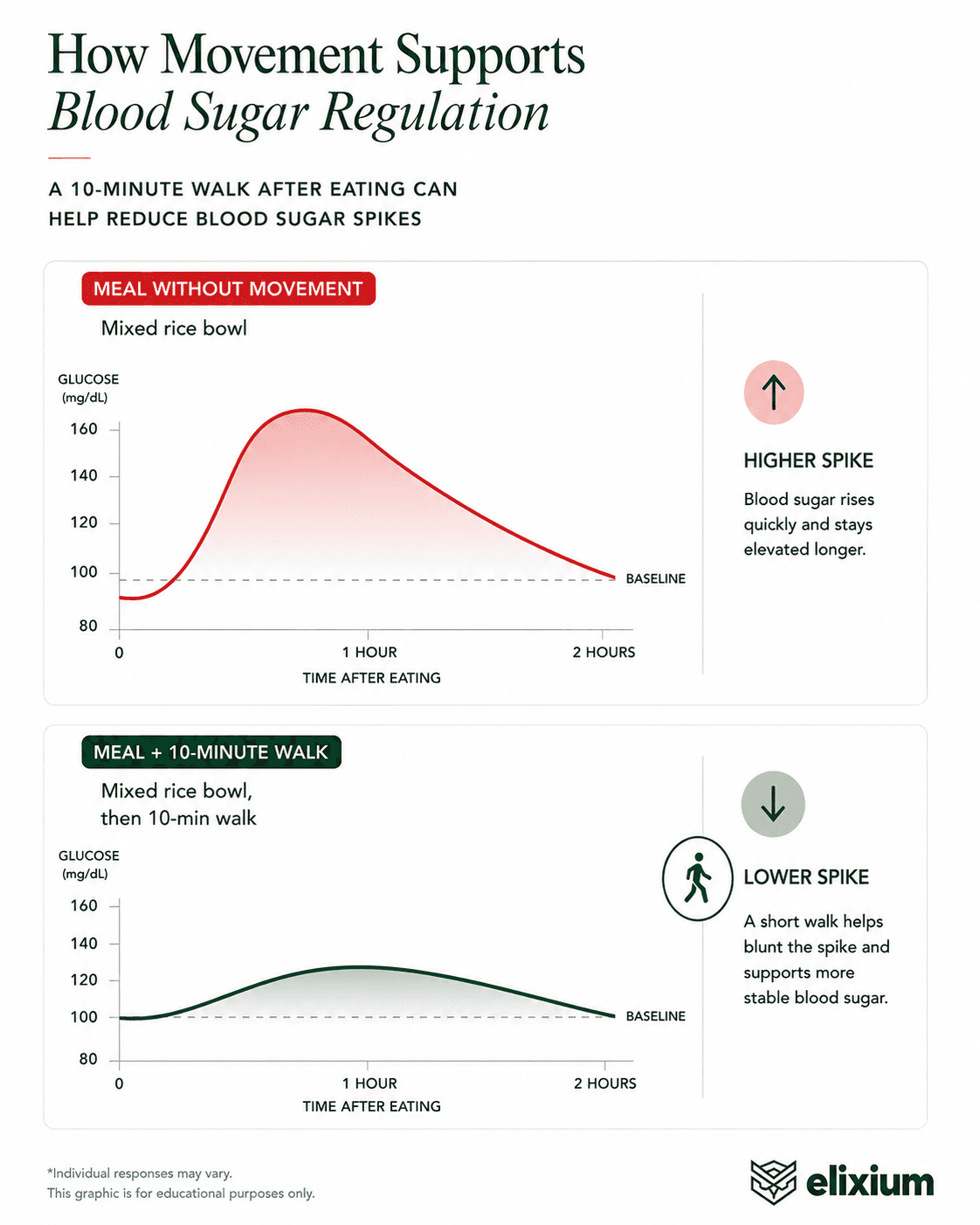
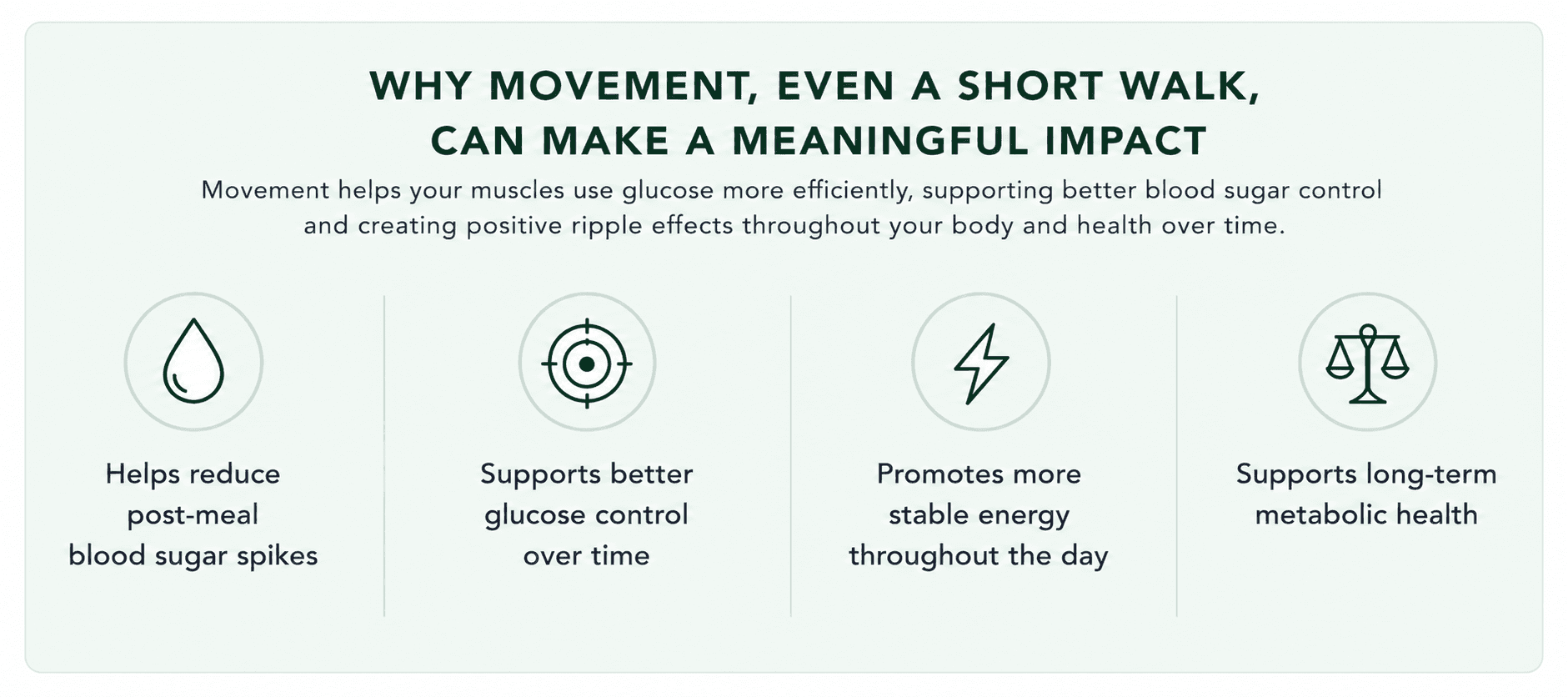
When muscles contract, they require energy. One of the primary sources of that energy is glucose. As a result, movement helps move glucose from the bloodstream into muscle tissue where it can be used immediately for energy rather than remaining elevated in the bloodstream.
Improved Insulin Sensitivity Supports Long-Term Metabolic Health
Over time, regular movement also improves insulin sensitivity, making the body more efficient at regulating blood sugar overall.
Why Body Composition Matters More Than Weight Alone
One meaningful adaptation associated with consistent movement, particularly resistance training, is its influence on body composition and visceral fat.
Visceral Fat and Metabolic Health
Unlike subcutaneous fat, which is stored beneath the skin, visceral fat surrounds internal organs and is more closely associated with insulin resistance, inflammation, cardiovascular risk, and metabolic dysfunction.
This is one reason body composition often provides more meaningful insight than weight alone. Two individuals can weigh the same on a scale while having very different amounts of muscle mass and visceral fat, resulting in significantly different metabolic profiles despite sharing the same body weight.
From an internal perspective, movement helps influence how the body utilizes and stores energy, both in the short term and long term. But movement is only one part of the equation. How the body responds to exercise depends not only on the activity itself, but also on recovery and overall stress load.
Consistency and Recovery
Exercise itself is a stressor, meaning it places physiologic demands on the body. In appropriate amounts, this stress is beneficial. Challenging the body through movement allows it to adapt positively and develop a greater capacity to respond to stress overall.
However, when exercise intensity, frequency, or recovery become imbalanced, the stress response can begin to work against metabolic regulation instead of supporting it.
When recovery consistently falls behind the demands being placed on the body, the effects often extend beyond fatigue and soreness and may contribute to elevated inflammation, impaired recovery, disruptions in appetite and energy regulation, and less favorable hormonal signaling.
In men, this may be reflected in lower testosterone levels, while women may experience changes in estrogen and progesterone balance. These shifts can make it more difficult to build or maintain muscle, recover effectively, regulate weight, and support long-term metabolic health.
While exercise is often prescribed as a solution for metabolic health, more is not always better. The "burn-to-earn" mindset can make it easy to overlook the broader benefits exercise provides throughout the body.
The goal of movement should not be to simply burn as many calories as possible. The goal is to create positive adaptations that support metabolic function, body composition, performance, recovery, and overall health over time.
The best exercise program is rarely the most aggressive one. More often, it's the one you can sustain consistently enough for your body to recognize the pattern, respond appropriately, and improve over time.
From Inputs to Data
From a physiologic perspective, the effects of exercise are not theoretical. They are measurable.
Consistent movement and recovery patterns can be reflected not only in the weight you see on the scale, but internally through:
improved fasting glucose
improved insulin sensitivity
reductions in visceral fat
increases or maintenance of muscle mass
improved body composition
improved hormone balance
markers of recovery and inflammation
indicators of cardiovascular health
These markers don't shift because of a single workout; they reflect how your body is responding to repeated inputs over time. And often, the physiologic adaptations reflected in lab data are what drive the physical adaptations you see, including changes in body composition and the weight on the scale.
While many people focus primarily on weight loss, weight itself is often the downstream result of what's happening internally.
The input principle applies across all systems. Movement influences blood sugar, blood sugar influences hormones, hormones influence inflammation, and inflammation influences metabolic health and recovery. Each system influences the next.
This is why we don't take a surface-level approach at Elixium and why we'll continue exploring other core variables throughout this series.
Trying to isolate a single driver of weight is often ineffective because, more often than not, it isn't one single factor.
Learn more about Elixium Health’s metabolic, hormone, and diagnostic testing approach
Applying the Input Principle
Your body reflects what you do repeatedly. Something as simple as consistently moving versus remaining sedentary can influence blood sugar regulation, support or strain recovery, build or diminish muscle mass, and ultimately shape long-term metabolic health and weight regulation – not in isolation, but as part of an interconnected system.
It's not only about "exercising more," which can mean different things to different people. It's about understanding how movement acts as a physiologic signal, creating consistency where it matters, and using your data to bring clarity to complex processes so you can make informed decisions that support sustainable weight loss, improved body composition, and long-term metabolic health.
Frequently Asked Questions About Exercise & Metabolic Health
What type of exercise is best for weight loss?
There is no single "best" form of exercise for weight loss. The most effective approach is one that can be performed consistently while supporting recovery, muscle maintenance, and long-term adherence. Walking, recreational activities, and cardiovascular exercise can all contribute positively to metabolic health and weight management. However, for individuals actively working to improve body composition and support sustainable weight loss, resistance training deserves special consideration. While all forms of movement provide benefits, resistance and strength training are among the most effective drivers of muscle maintenance, insulin sensitivity, metabolic health, and favorable body composition changes over time.
Do I need to exercise intensely to improve my metabolism?
No. While higher-intensity exercise can be beneficial for some individuals, consistent movement of any kind can positively influence blood sugar regulation, insulin sensitivity, energy production, and overall metabolic health. Consistency is often more important than intensity.
Why is resistance training important as we age?
Resistance training helps maintain and build muscle mass, support bone density, improve insulin sensitivity, and preserve physical function over time. These adaptations become increasingly important for long-term metabolic health, body composition, and healthy aging.
Does walking after meals help lower blood sugar?
Yes. Light movement after eating can help muscles utilize glucose for energy, reducing post-meal blood sugar elevations and supporting more stable glucose regulation throughout the day.
Can too much exercise negatively affect health?
Exercise is generally beneficial, but recovery is also part of the process. When exercise volume or intensity consistently exceeds recovery capacity, some individuals may experience increased fatigue, elevated inflammation, impaired recovery, hormonal disruptions, and stalled progress.
How can testing help personalize an exercise plan?
Lab testing and health data can provide insight into factors such as blood sugar regulation, inflammation, recovery capacity, hormone balance, body composition, and overall metabolic health. At Elixium Health, these insights help guide individualized recommendations that align with both physiology and personal health goals.
If you’re looking for more clarity and direction in reaching your health goals, find your personalized Elixium Health starting point:
Start your personalized metabolic and wellness assessment with Elixium’s Clarity Check
The Next Input: Stress
In the next part of this series, we'll shift to stress, one of the most influential yet often overlooked inputs affecting metabolic health and weight regulation. While nutrition and exercise are commonly discussed in the weight loss conversation, stress is rarely given the same attention despite its significant impact on blood sugar regulation, hormone balance, inflammation, recovery, and overall metabolic function.
We'll explore how stress influences these same interconnected systems and why understanding your total stress load may be one of the most important factors in driving sustainable metabolic change.

Victoria Hasenyager, RDN
Registered Dietitian
Head of Strategic Partnerships & Elixium Labs Operations
6/01/2026
Medical Disclaimer: The information provided in this article is intended for educational and informational purposes only and should not be considered medical advice. Content is not intended to diagnose, treat, cure, or prevent any disease or health condition. Individual health needs vary, and readers should consult with a qualified healthcare professional before making changes to their nutrition, exercise, or healthcare plan. Always seek the guidance of your physician or other qualified healthcare provider regarding any medical concerns or treatment decisions.