What we test
88 biomarkers. One blood draw.
Every marker in your starting panel is listed below, with what it tells you. A licensed provider reads them together, and your Health Strategist turns them into a plan.
 Take Clarity Check
Free · takes about 2 minutes
The markers a routine checkup leaves out.
These are often left off a routine panel. Your starting Elixium panel includes all ten.
Apolipoprotein B
Counts the particles that carry cholesterol into artery walls, often a sharper heart-risk signal than LDL alone.
Lipoprotein(a)
A largely inherited cholesterol particle linked to heart disease that most standard panels never check.
Fasting insulin
Shows how hard your body is working to keep blood sugar in range, often before glucose changes.
hs-CRP
A sensitive marker of low-grade inflammation in the body.
Homocysteine
An amino acid that can run high when B vitamins are low and is linked to heart and brain health.
Omega-3 Index
Shows how much omega-3 fat (EPA and DHA) is in your red blood cells.
Thyroid antibodies (TPO)
Antibodies that point to Hashimoto’s, often years before TSH changes.
Free T3
The active thyroid hormone your cells actually use.
SHBG
A protein that binds sex hormones and decides how much is free to use.
IGF-1
Reflects growth hormone activity, which affects muscle, recovery and repair.
Every marker, in plain English.
Heart · 11 markers
Apolipoprotein B. Counts the particles that carry cholesterol into artery walls, often a sharper heart-risk signal than LDL alone.
Lipoprotein(a). A largely inherited cholesterol particle linked to heart disease that most standard panels never check.
hs-CRP. A sensitive marker of low-grade inflammation in the body.
Homocysteine. An amino acid that can run high when B vitamins are low and is linked to heart and brain health.
OmegaCheck / Omega-3 Index. Shows how much omega-3 fat (EPA and DHA) is in your red blood cells.
Total cholesterol. All the cholesterol in your blood, the starting point of a lipid panel.
HDL cholesterol. The cholesterol that helps carry excess cholesterol back to the liver.
LDL cholesterol. The cholesterol most closely tied to plaque building up in arteries.
Triglycerides. Fat in your blood that rises with sugar, refined carbs and alcohol.
Total cholesterol to HDL ratio. Compares total cholesterol with HDL to give a quick view of the balance.
Non-HDL cholesterol. All the cholesterol carried by particles that can build up in arteries.
Metabolism & nutrients · 7 markers
Glucose. Your blood sugar at the moment of the draw.
Hemoglobin A1c. Your average blood sugar over roughly the last three months.
Insulin. Shows how hard your body is working to keep blood sugar in range, often before glucose changes.
Uric acid. A waste product linked to gout, kidney stones and metabolic health.
Ferritin. Your body’s stored iron, a common reason for fatigue when it’s low.
Vitamin D, 25-hydroxy (total). The main measure of vitamin D, which supports bones, muscles and immune function.
Vitamin B12. A vitamin needed for energy, nerves and making red blood cells.
Hormones · 12 markers
Testosterone, total. All the testosterone in your blood, bound and unbound.
Testosterone, free. The small share of testosterone that isn’t bound and is free for your body to use.
Testosterone, bioavailable. Free testosterone plus the loosely bound portion your tissues can use.
Sex hormone binding globulin (SHBG). A protein that binds sex hormones and decides how much is free to use.
Estradiol. The main form of estrogen, important for both women and men.
FSH. A brain signal that drives the ovaries and testes, useful for reading menopause and fertility.
LH. A brain signal that tells the ovaries and testes to make hormones.
DHEA-sulfate. A hormone from the adrenal glands that the body uses to make other hormones.
Prolactin. A pituitary hormone that can lower sex drive and hormones when it runs high.
IGF-1. Reflects growth hormone activity, which affects muscle, recovery and repair.
IGF-1 Z-score (sex-specific ranges). Shows where your IGF-1 sits against people your age and sex.
PSA, total (men) or Progesterone (women). PSA screens prostate health in men; progesterone shows cycle and perimenopause changes in women.
Thyroid · 7 markers
TSH. The brain’s signal to the thyroid, usually the first thyroid test anyone runs.
T4 (thyroxine), total. The main hormone your thyroid makes.
T3, free. The active thyroid hormone your cells actually use.
T3 uptake. Helps show how much thyroid hormone is bound versus available.
Free T4 index (T7). An estimate of free T4 calculated from total T4 and T3 uptake.
Thyroid peroxidase antibodies (TPO). Antibodies that point to Hashimoto’s, often years before TSH changes.
Thyroglobulin antibodies. A second thyroid antibody that can show autoimmune thyroid disease.
Liver, kidney & electrolytes · 18 markers
Albumin. The main protein your liver makes, a sign of nutrition and liver function.
Globulin. Proteins that include antibodies and help fight infection.
Albumin to globulin ratio. Compares the two main blood proteins as a check on liver and immune health.
Total protein. All the protein in your blood.
Total bilirubin. A yellow pigment from old red blood cells, cleared by the liver.
Alkaline phosphatase. An enzyme from the liver and bones.
AST. An enzyme that rises when liver or muscle cells are stressed.
ALT. An enzyme that rises mainly when liver cells are stressed.
GGT. A liver enzyme that is sensitive to alcohol and bile flow.
Urea nitrogen (BUN). A waste product that shows how well your kidneys clear protein breakdown.
Creatinine. A muscle waste product used to check kidney filtering.
eGFR. An estimate of how well your kidneys filter, calculated from creatinine.
BUN to creatinine ratio. Compares two kidney markers, which can point to hydration or kidney changes.
Sodium. A key electrolyte for fluid balance and nerves.
Potassium. An electrolyte that keeps heart and muscle rhythm steady.
Chloride. An electrolyte that works with sodium to balance fluids.
Carbon dioxide. Bicarbonate in your blood, a sign of your body’s acid-base balance.
Calcium. A mineral for bones, muscles, nerves and heart rhythm.
Blood count & immune cells · 33 markers
White blood cell count. The total number of infection-fighting cells in your blood.
Red blood cell count. The number of cells carrying oxygen around your body.
Hemoglobin. The protein in red cells that carries oxygen.
Hematocrit. The share of your blood made up of red cells.
MCV. The average size of your red blood cells, a clue to iron or B12 issues.
MCH. The average amount of hemoglobin in each red cell.
MCHC. How concentrated the hemoglobin is inside your red cells.
RDW. How much your red cells vary in size.
MPV. The average size of your platelets.
Platelet count. The cells that help your blood clot.
Neutrophils (count and %). The most common white cells, first to respond to bacterial infection.
Band neutrophils (count and %). Young neutrophils that can rise during an infection.
Metamyelocytes (count and %). Immature white cells, usually zero in healthy blood and reported only if present.
Myelocytes (count and %). Immature white cells, usually zero in healthy blood and reported only if present.
Promyelocytes (count and %). Very early white cells, usually zero in healthy blood and reported only if present.
Lymphocytes (count and %). White cells that fight viruses and make antibodies.
Monocytes (count and %). White cells that clean up damaged cells and fight infection.
Eosinophils (count and %). White cells that rise with allergies and parasites.
Basophils (count and %). White cells involved in allergic reactions.
Blasts (count and %). The earliest blood cells, normally not seen in blood and reported only if present.
Nucleated red blood cells (count and %). Immature red cells, usually zero in adults and reported only if present.
Reactive lymphocytes. Lymphocytes that change shape while fighting a virus, reported if present.
One number rarely tells you much. Patterns do.
A licensed provider reads related markers side by side, so a "normal" result can still mean something.
Insulin can rise years before glucose does.
Read with glucose and A1c, a high fasting insulin shows your body working harder to hold blood sugar steady.
A normal TSH doesn’t rule out Hashimoto’s.
Antibodies and free T3 sit next to TSH, so an autoimmune thyroid isn’t missed while TSH still looks fine.
Total testosterone is only half the story.
SHBG decides how much is free to use, and estradiol and LH show why levels are where they are.
See every result
Results land in your patient portal. A licensed provider reviews every one and goes through them with you, and your Health Strategist builds your plan.
1. Your draw. At a Quest near you, or at home for $79 more. 2. Results in your portal. 10–14 days after your draw, every marker with its range. 3. Reviewed by a licensed provider. Every result, read together, not one at a time. 4. Your Flight Plan call. Your Health Strategist builds your Flight Plan with you. 5. Your provider call. A licensed provider goes through your results with you and approves your plan. 6. Ask Eli anytime. Plain-language answers about any result.
When your plan needs a closer look.
Some questions need more than blood work. These are added only when your plan calls for them.
Deep GutCheck+
Maps the bacteria in your gut and estimates what they produce, read alongside your blood work.
Genetic test
Looks at genes linked to nutrition and metabolism, read with your labs by a licensed provider.
Cortisol, saliva
Tracks your stress hormone at several points across one day, which a single blood draw can’t show.
Micronutrient test
A deeper look at vitamins, minerals and antioxidants than the core panel covers.
Advanced lipid panel
Particle size and number behind your cholesterol, for a closer look at heart risk.
MTHFR
Checks a common gene variant that affects how you use folate.
One draw.
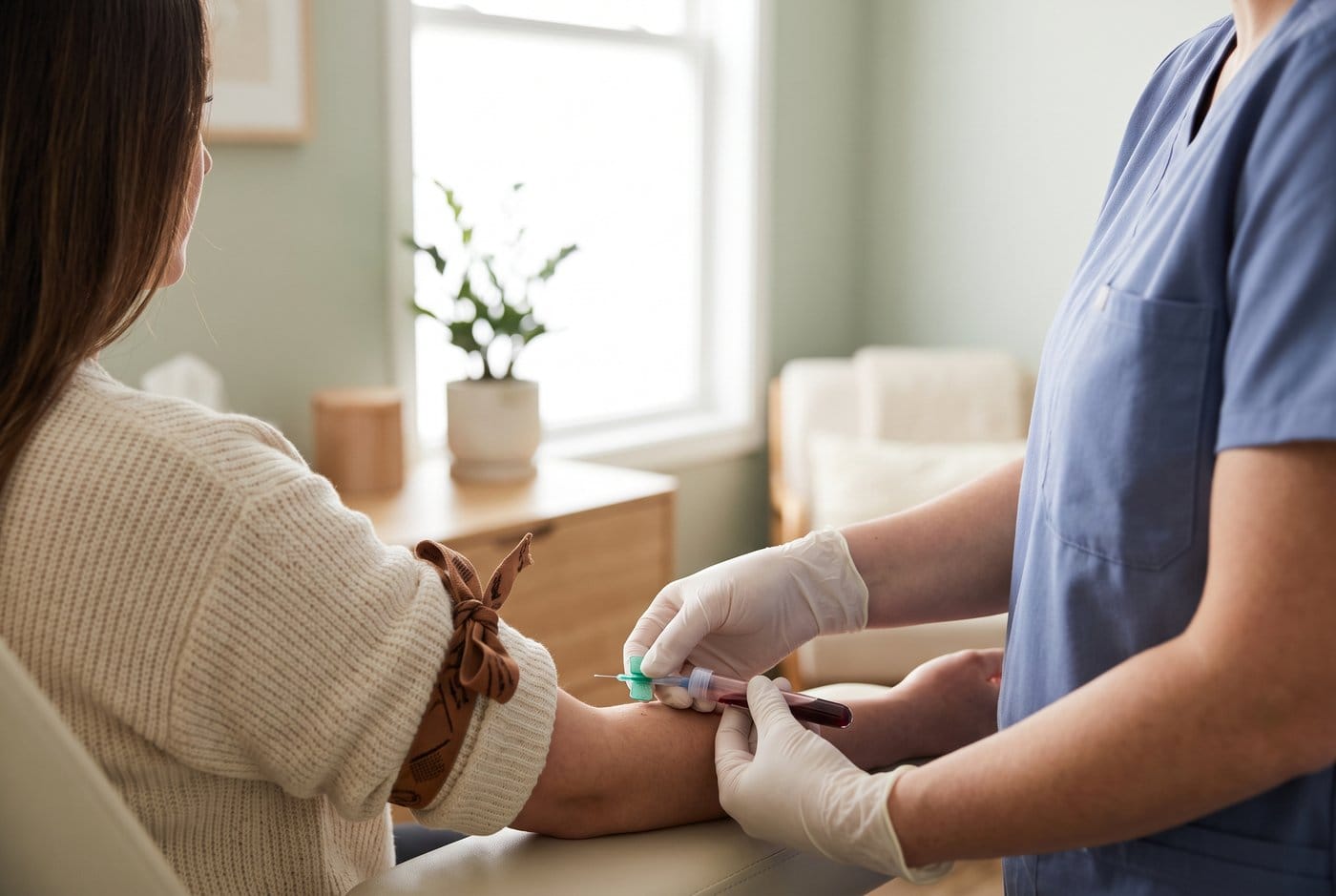
Book at a Quest near you, or at home for an additional $79. Pick a morning time, before 11am: hormones are closest to baseline in the morning.
Fast 8–10 hours. Drinking water is a must; it makes the draw easier.
Results in 10–14 days. Then your Flight Plan call with your Health Strategist, and a call with your licensed provider.
See what your body’s been telling you.
Start with the free Clarity Check. It takes about 2 minutes.
Take Clarity Check Get Started